Welcome! I am a self-trained chef with two decades of diabetic friendly cooking to my name. This blog has over 300 proven recipes and zero advertising. For me it's about helping fellow diabetics eat well... Period. Blessed be... and happy cooking!

Saturday, March 7, 2026

Weekend Ramble: Best & Worst Seafood Dishes for Your Health

 Another great compilation from WebMD.

Best & Worst Seafood Dishes for Your Health
Medically Reviewed by Poonam Sachdev on August 30, 2023

What Makes the Difference?

You’ll want to consider what’s in the dish, how it was cooked, freshness, and the type of fish. There are lots of good choices, but some are better than others. You’ll want to limit cream, oil, salt, “bad” fats, and mercury. Do you know what’s in your seafood entree?  


Best: Salmon

It’s a nutritional darling that you’ll see on many U.S. menus. It’s high in healthy omega-3 fatty acids. And as a canned fish, it generally has less mercury than tuna. Wild salmon caught in Alaska is a good source, whether fresh or canned. Because fatty fish like salmon can have more of banned chemicals called PCBs, it helps if you cut away or drain extra fat, skin, and darker meat.

Worst: Fish and Chips

The fact that everything in this dish is deep-fried is not a good start. The tartar sauce and ketchup often served with it add even more fat, sugar, and calories. If you bake the fish (try it with a cornflake crust for a crunch) and potatoes, you can control the amount of oil. A simple lemon wedge is a low-calorie way to add flavor.

Have Sparingly: Broiled Swordfish

No matter how it’s caught or how you cook it, swordfish is likely to have high levels of mercury. It’s not a big deal to eat once in a while, but too much can damage your brain and kidneys. If you’re pregnant, that may hurt the baby or cause a miscarriage. Infants, the elderly, and those who have weak immune systems may be more sensitive to it. Shark, king mackerel, and tilefish from the Gulf of Mexico also have high levels of mercury.

Best: Shrimp Cocktail

It’s all about the sauce. The shrimp are usually steamed or boiled, which is pretty healthy. They’re high in protein, and low in fat and mercury. But the sauce, especially the classic bottled tomato-based type, can hide lots of sugar, sometimes listed as “high-fructose corn syrup.” So skip the dip, or make your own sugar-free version. You’ll find lots of recipes online.

Worst: New England Clam Chowder

Sure, it’s got clams, which give you protein. But this soup also has cream, butter, and salted pork. So you could get lots of calories, saturated fat, and sodium, which many people need to limit. Save this one for a special treat and try not to have too much. 

Best: Manhattan Clam Chowder

Instead of butter and cream, this chowder uses a base of tomatoes. That’s a really good start. Potatoes, carrots, and onions fill out the dish. It adds up to about 135 calories a cup with little saturated fat, compared with around 181 calories a cup for the same amount of New England clam chowder. Mercury is not usually a worry with “bivalve” shellfish like mussels, oysters, and clams. Be aware that ready-to-serve soup has an estimated 1000 mg of sodium in 1 cup.

Best: Salad With Anchovies

Because they’re small and don’t live that long, these fish are less likely to have mercury, PCBs, and other chemicals in their flesh. And they’re loaded with omega-3 fatty acids that your body needs to be at its best. Some packaged anchovies have a lot of salt, so check the label, especially if you have to watch your sodium. Look for white anchovies in vinegar -- “boquerones” in Spanish cuisine -- for a less-salty version.

Best: Canned Tuna

This lean fish gives you protein, and has some omega-3s. But tuna grow bigger than fish like sardines and anchovies, so they often have more mercury and other chemicals in their flesh. For lower mercury levels, look for the “canned light” kind. If you like albacore, look for products from the U.S. or Canada. If you’re watching your calories and fat, buy tuna packed in water instead of oil.

Best: Oysters

You’ll get protein and zinc, but it’s best to cook oysters, not eat them raw. That will help avoid food poisoning from bacteria like vibrio. This bacteria is more common in warmer months but can happen anytime. Hepatitis A can also be a risk with shellfish. Your oysters may be fine, but you can’t tell if it’s infected by how it looks and smells. Lemon juice, hot sauce, or alcohol won’t kill vibrio. Only thorough cooking can do that. 

Best: Baked Catfish

They may not be the prettiest fish to look at, but U.S. farm-raised catfish have a lot going for them. They’re low in mercury, eco-friendly, nutritious, and easy to find in grocery stores. You may want to check on the source, since some countries don’t have strict rules about fish farming. Fried catfish is a favorite for many, but frying adds lots of calories and fat. Bake it for a leaner dish. 

Best: Grilled Sardines

They’re usually canned, but you can sometimes get fresh ones at the market that are great when grilled whole. They’ve got plenty of omega-3s and not much mercury, because they’re small and short-lived. Plus, there really are lots of these fish in the sea, and they usually aren’t expensive. As with tuna, you can get them packed in water instead of oil.

Best: Ceviche

Made with raw fish, lime juice, and often potatoes and onions, this is a traditional dish from Latin America. The acid in the lime juice may seem to “cook” it because the flesh changes color. A week in the freezer at -4 F usually gets rid of parasites that could make you sick. But the size and type of fish also make a difference, so let a chef make your ceviche.

Have Sparingly: Sushi

It can be good for you, with lean protein, omega-3s, and not a lot of fat, sugar, and calories. But there are some drawbacks. Raw fish needs expert handling. Bacteria and parasites don’t get cooked away, but a good chef knows how to keep you safe.  And mercury in common sushi fish like ahi and bluefin tuna can start to add up if you eat too much.

If You’re Cooking

When you’re at the market, seafood shouldn’t smell fishy. And if you can see the fish’s eyes, they should be clear. If the bones are a problem, you can buy fillets. Experts recommend that you cook fish until it flakes easily with a fork. You can cook it many ways: roast, bake, grill, or steam, to name a few. There are many recipes to try, so cast a broad net!


-----------------------------------------------------------------------------------------------------------

Have a great week, everyone, and thank you for your support!

Blessed be… and happy cooking!

                                                            Chef Michael R


Friday, March 6, 2026

Lemony Pollock Bites & Two Bean Medley

Rainy days are the best for creating new things. We had just gotten back from vacation and there were only frozen and canned goods in the house. Weather was not conducive to a fun shopping trip, so I got out my Flavor Bible and found some fun pairings. In short, a new dish was added to my line-up... ENJOY!

Ingredients:

  • 12 oz total pollock bites or other white fish cut bite size
  • 3 eggs
  • Wondra flour
  • unseasoned Panko
  • Florida Sunshine Citrus salt blend – Spice & Tea Exchange
  • Citrus Pepper - FreshJax
  • avocado oil


  • 12 oz pkg frozen baby lima beans
  • 15 oz cannellini beans, drained
  • 2-3 cloves garlic – smash minced
  • 1 cup chopped onions
  • 1 cup julienned carrots ~1.5” long
  • 1 tbsp lemon zest
  • Florida Sunshine Citrus salt blend – Spice & Tea Exchange
  • Citrus Pepper - FreshJax

Preparation:

Fish: Pat fish dry and dust with Wondra flour. Beat eggs and season with citrus salt and citrus pepper. Heat a generous amount of avocado oil in a pan large enough to accommodate all bites. Dip bites in egg, coat with Panko and fry over medium high heat, tossing occasionally, until golden brown on most sides.

Beans: Cook lima beans according to pkg directions and set aside. Saute onion and garlic until onions are just translucent. Add carrots and cook for another 1-2 minutes. Add lemon zest and blend. Season mix with citrus salt and citrus pepper to taste. Finally add lima and cannellini beans and gently blend until evenly heated.

Blessed be… and happy cooking!

Thursday, March 5, 2026

Fish Soup & Crostini

This fish soup is the precursor to what eventually became my more lavish Sylvan Run Chowder. It may seem simple at first glance, but the flavors are definitely there and can provide a nice base for you to explore some of your own ideas on how to tweak this basic recipe.

Ingredients:

  • 2 medium yellow onions chopped
  • 4 stalks celery chopped
  • 1/2 cup dry white wine
  • 4 small red potatoes cubed
  • 2 cups clam juice
  • 2 bay leaves
  • 1 tsp dried thyme
  • 1 tsp salt, 1/4 tsp fresh ground black pepper
  • 1 tsp sweet paprika
  • 24 ounces cod or similar white fish, defrosted and cut into 2" chunks
  • 1 pint half and half
  • Handful fresh flat-leaf parsley, chopped
  • 1 loaf good Italian bread and some good olive oil, extra virgin if that’s your thing


Preparation:

Saute onions in 1 tbsp butter and 1 tbsp olive oil and a pinch of salt, 5 minutes over medium heat. Add celery and another pinch salt and saute a few minutes more. Raise heat and add wine, allow to reduce by half.

Add potatoes, clam juice, and spices. If potatoes are not covered by liquid, add enough water to cover. Bring to a boil and then reduce to a simmer and cook with lid on until potatoes are just tender, 10-15 minutes.

Heat half and half in a small saucepan over low heat - do not allow to boil. Add fish to pot with potatoes and pour over hot half and half and stir gently. Cook on low heat uncovered just until fish is cooked through, about 8-10 minutes.

Keep the heat low enough so that the broth is just barely steaming, do not allow to boil or it could curdle. Remove bay leaf, add fresh parsley, and turn off heat. Allow to rest for 15-20 minutes to allow flavors to blend. Reheat gently if necessary. Makes about 4 servings.


Crostini:

Cut loaf into 1/4” slices on an angle so they’re larger than loaf diameter and also prettier.

Brush both sides of each slice with olive oil and arrange on baking tray. It’s ok if they touch each other.

Bake at 375 degrees for 6-7 minutes or until tops just start to brown. The bottom side will be more toasted so JUST browned tops is when you want to take them out.

Blessed be... and happy cooking!


Wednesday, March 4, 2026

Slow Cooker Mediterranean Chicken

This is one of those really simple dishes that is chock full of flavor simply by way of the ingredients themselves. You'll notice the only spices are a bit of salt and lemon pepper, allowing everything else to shine in its natural glory. Enjoy!


Ingredients:
  • 1.75 - 2 lbs brined chicken breast
  • 1 tbsp lemon pepper - I use FreshJax... great blend and the company donates meals to kids in need.
  • 2 onions cut in quarters or eighths
  • 6 cloves garlic diced
  • 1/2 cup white wine (Not cooking wine - too much salt)
  • 1 can whole tomatoes, drained and halved
  • A handful of fresh basil leaves
  • 2 tbsp olive oil, salt & pepper
    Brine:
  • 4 cups water 
  • 1tbsp salt
  • 1 lemon
Preparation:
Brining the Chicken
Trim the breasts of fat and junk. Lay breast flat,
cut in half lengthwise and then cut halves into stew size chunks.
Mix 4 cups water with 1 tbsp regular salt and fresh squeezed juice from 1 lemon.
Add chicken to brine, stir a little so chicken pieces are in brine on all sides.
Refrigerate and let sit for 1 hour.
When time's up, pour chicken into a colander and give a quick rinse to remove most of the salt.

Gather the Slow Cooker Components
Place drained & rinsed chicken in large mixing bowl. Add olive oil and lemon pepper... mix. Heat a large skillet on medium high and sear the chicken on all sides. Spray the slow cooker with cooking spray and place chicken in bottom of pot.
Add wine, garlic and onions to skillet and stir/toss over medium heat until slightly browned.
Spread evenly over meat.
Cover with a layer of basil leaves and then tomatoes, cut side down.
Sprinkle with kosher salt as you see fit and cook on low for 5-6 hours.
Gently break up the tomatoes before serving and fold in carefully with the chicken.
Serve with fresh broccoli and quinoa or barley made with a chicken broth.
Blessed be... and happy cooking!

Tuesday, March 3, 2026

Steamed Cod with Lemon Butter Sauce

Here's a simple one that has endless possibilities in the pairing arena. I decided on some of my leftover White Bean Salad and fresh string beans. The salad is already citrus based and the green beans work really well with a drizzle of lemon butter. Enjoy!

Ingredients:

Fish:

  • 2  6-ounce cod filets
  • 2 tsp Garlic Lover’s Blend pulverized (toasted garlic, salt, paprika, parsley)
  • Black pepper to taste – one twist on the grinder works for me
  • 1tbsp extra virgin olive oil

 Sauce:

  • 3 tbsp butter
  • Juice & zest from ½ lemon
  • 1/4 tsp Kosher salt

Preparation:

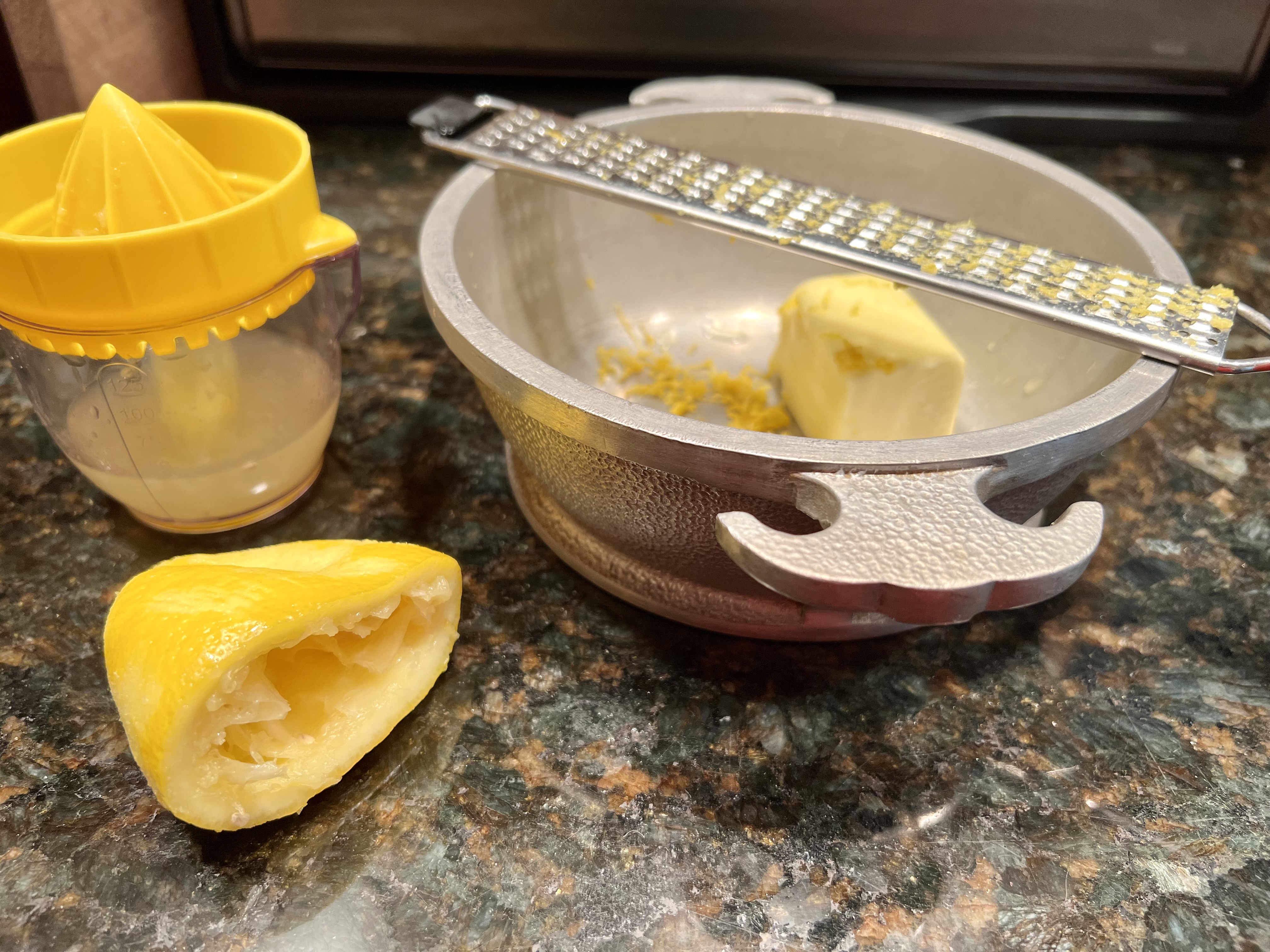
Juice and zest the lemon to be ready.

Pat filets dry, coat with EVOO and season fish on both sides. Steam for 4 minutes.

While fish is steaming, combine butter, salt, lemon & zest and warm in small pot. Add some sauce to the fish when steaming is done. Serve rest of sauce at the table.


Blessed be... and happy cooking!

Monday, March 2, 2026

Panko Crusted Pollock Bites

Pollock bites are so much fun to use for  experimenting/creating. Here I decided to try my trusted DMP (Dijon/Mayo/Panko) coating to create some slightly crunchy bites including Coastal Blend Seasoning from The Spice & Tea Exchange.

Ingredients:
  • 2 pkgs - 12 oz total - Wild Alaskan Co. pollock bites
  • 2 tbsp Dijon mustard
  • 2 tbsp mayonnaise
  • 2 tbsp olive oil
  • 1/2 tsp Coastal Blend from Spice & Tea Exchange
  • ~2 cups plain Panko
  • avocado oil
Preparation:
In a bowl that will hold all bites mix Dijon, mayo, oil and coastal blend until creamy smooth.
Pat fish dry and cover with coating mix. Heat a generous amount of avocado oil in a pan large enough to accommodate all bites. Dip bites in coating, cover with Panko and fry over medium high heat, tossing occasionally, until golden brown on most sides.

Serve with lightly buttered broccoli and a tossed salad... 'cause it's good for ya! 
Blessed be... and happy cooking!

Sunday, March 1, 2026

Coconut Lime Fish Soup

Credit for this soup goes to a friend who found it at Grandma's Recipes and shared in my FB group.

This flavorful soup will transport you to thoughts of a tropical paradise where the ocean meets the shores and flavors that pair the sea with coconut, lime and a bit of heat send your tastebuds soaring. Enjoy!       

Ingredients:

  • 1 lb white fish fillets (cod, halibut, or tilapia)
  • 1 tbsp olive oil
  • 1 small onion - diced
  • 2 garlic cloves - minced
  • 1 tbsp ginger - minced
  • 1 tbsp red curry paste
  • 1 14 oz can coconut milk (you can use light coconut milk if you prefer)
  • 2 cups chicken or vegetable broth
  • 1 tbsp fish sauce
  • Juice of 1 lime
  • Salt and pepper to taste
  • Fresh cilantro - for garnish
  • Lime wedges - for serving

Preparation:

Prepare Fish:

Pat fish fillets dry with a paper towel, season with salt and pepper, and set aside.

Sauté Aromatics:

Heat olive oil in a large pot over medium heat. Add diced onions and cook until soft, about 3-4 minutes. Add garlic, ginger, and curry paste, cooking for another minute until fragrant.

Add Liquid:

Stir in coconut milk and broth. Bring to a simmer.

Simmer Fish:

Gently add the seasoned fish fillets to the simmering soup. Cook for 8-10 minutes until the fish is cooked through and flakes easily with a fork.

Season Soup:

Stir in fish sauce and lime juice. Taste and adjust seasoning with salt, pepper, or more lime juice as needed.

Serve & Garnish:

Ladle soup into bowls, garnish with fresh cilantro, and serve with lime wedges on the side for an extra citrus kick!

Blessed be… and happy cooking!

Saturday, February 28, 2026

Weekend Ramble: "When I cook, I am looking to..."

Have you ever thought about your cooking? ... I mean really thought about why you cook the way you do? What has shaped your style, your ingredients, your go-to flavors? Were you taught by Mom and Dad? Did you take some cooking classes or go to culinary school?

Well, regardless of background, we all have our individual style, and that's a really cool thing, isn't it? Just like the famous chefs out there, there are certain things about our cooking that define a dish as our own.

When I first started cooking (decades ago...ahem) it was all about spices... the notion being that the more spices you added, the better the dish would be. Over the years that did tone down some, but for the most part I have always been heavy handed on adding herbs and spices to my dishes. That is... until I retired and found I had the time to really get into flavors and more complex dishes.


A number of years ago I received as a gift my all-time favorite
cookbook, which is not really a cookbook at all. 
The Flavor Bible by Karen Page and Andrew Dornenburg is an outstanding compilation of food items organized alphabetically along with lists of complimenting flavors for each item. 
There are no recipes in the book... AT ALL. Just... flavors. The recipe is up to the cook to design... and I just love that! I really enjoy being in my kitchen with the book... imagining what the different flavor combos will produce. IT'S FUN!

Scattered throughout the book are little blurbs and quotes from some of the most famous chefs in the culinary field. One, in particular, caught my eye and made me think... Really? Huh! It was a notion so foreign to me that I was blown away by its simplicity. Chef Michael Anthony of Gramercy Tavern in New York City suddenly became my role model with this line:

"When I cook, I am looking to pull myself back from a dish
rather than add to a dish. I would rather a dish feel too
simple than too fussy. Sometimes, though, you need some
extra ingredients as long as they work dynamically."

With this kitchen creed as my guide, I have learned to focus on letting the main ingredient of a dish shine rather than hiding it with spices and cover-up flavors. It's very similar to the art of sushi, where the VERY subtle differences from fish to fish can only be fully appreciated if the base flavor of the fish itself remains the focus at hand.

Stepping back from a dish is often not easy, but with practice it will actually change the abilities of a pallet. Subtle flavor differences become wow factors, and flavor levels within a given dish? Well let's just say it's a whole new world!

Just so you can see I'm serious about Chef Michael Anthony's creed... here it is as seen every day in my kitchen!

-----------------------------------------------------------------------------

Have a great week, everyone, and thank you for your support!

Blessed be… and happy cooking!

                                                            Chef Michael R